
Empowering Persons with Disabilities Through ICT-Driven Profiling

Author
NUDIPU ORG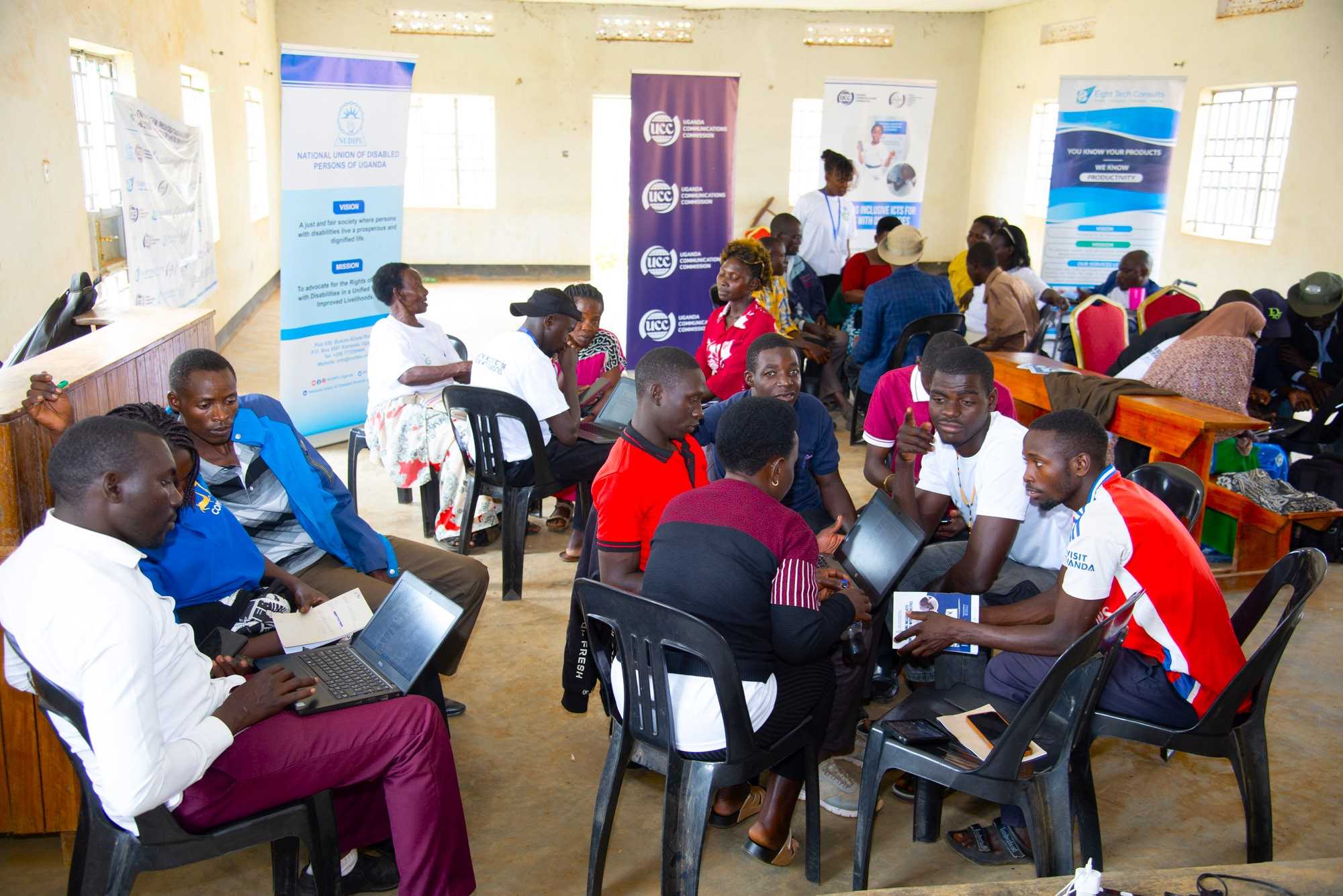
As part of our ongoing commitment to fostering inclusivity and equitable access to services, the Persons with Disabilities (PWDs) Profiling Project has entered a new, strategic phase. Building on the insights and lessons from the recently concluded first phase. The initiative, of the ongoing ICT for Persons with Disabilities (ICT4PWD) program, seeks to generate accurate data to inform planning, policy, and service delivery for the country’s estimated 12.4% of citizens living with a disability.
Historical Background of the ICT4PWDs Project
The ICT4PWDs project was initiated under the Uganda Communications Commission’s Universal Service and Access Fund (UCUSAF), in alignment with the Persons with Disabilities Act (2020) and the Communications Act (2013). Its goal is to close the digital divide and ensure PWDs have access to ICT services. Since its inception in late 2023, the program has profiled tens of thousands of PWDs, trained over 13,000 individuals in digital skills, established a National Disability Digital Observatory, and developed ICT tools and platforms to support inclusion.
Partners and Stakeholders
The ICT4PWDs initiative is a collaborative effort led by:
• Uganda Communications Commission (UCC) through UCUSAF funding,
• National Union of Disabled Persons of Uganda (NUDIPU), the umbrella organization for disability advocacy,
• Eight Tech Consults Ltd, the technical implementation partner.
Additional stakeholders include local district disability organizations, community enumerators, educational institutions, service providers, and government bodies.
Phase One Results Show Significant Progress

In the recently concluded first phase, over 66,000 persons with disabilities were successfully profiled across 73 districts, according to figures from NUDIPU. The initial target was to reach 80,000 PWDs, a figure that will now be pursued in the current rollout.
The profiling exercise gathered comprehensive data, including the type of disability, education level, employment status, access to assistive devices, and geographic location. The information is being stored in the newly created National Disability Digital Observatory, a centralized platform developed to support government and partner institutions in making data-driven decisions.
The categories profiled covered a wide range of disabilities, including:
• Physical disabilities
• Visual and hearing impairments
• Intellectual and psychosocial disabilities
• Multiple and age-related impairments
While the first phase was widely successful, officials noted that challenges such as stigma, remote terrain, and limited digital access prevented full realization of the initial target.
Second Phase Aims To Fill Remaining Gaps

The second phase, which is now underway, targets profiling an additional 14,000 persons with disabilities. Focus areas include reaching more women, children, and elderly PWDs, particularly those previously underrepresented in the dataset.
The official inception meeting for Phase II was held on 20 May 2025, marking the beginning of expanded profiling activities.
Districts Being Profiled In Phase II
The new phase builds on the 73 districts covered in Phase I and aims to extend reach to additional underrepresented and remote areas. The profiling focus will be on rural districts, especially where terrain and stigma previously hindered access. Specific districts are currently being mapped and prioritized for maximum inclusion impact.
Officials say this phase builds on earlier lessons by deploying community mobilization strategies, strengthening partnerships with local leaders and disability organizations, and offering incentives such as digital training and improved access to assistive devices.
A key tool in this phase is the ICT4PWD mobile and web application, which enables both self-registration and data entry by community enumerators. The platform supports real-time data updates and can be accessed even in rural areas through mobile connectivity.
In 2024, more than 500 persons with disabilities were trained in digital literacy and ICT skills in over 26 districts under the same project. This training component will be scaled up in the current phase to address the digital divide and improve access to economic opportunities for PWDs.
Why Profiling Matters
Officials from NUDIPU emphasize that the digital profiling initiative is about more than just collecting data. It is a strategic move to ensure that persons with disabilities are not left behind in Uganda’s development agenda.
“With reliable, disaggregated data, we can plan better, advocate more effectively, and ensure resources reach the people who need them,” said a NUDIPU spokesperson.
The data is already being used to inform inclusive education programs, guide infrastructure development, and influence policy at both national and district levels.
Future Recommendations and Way Forward
Based on feedback from the field, several recommendations have been proposed to guide future profiling efforts:
• Expand assistive device access, including screen readers and captioning software
• Increase awareness campaigns to reduce stigma and encourage participation
• Train more local data collectors to improve reach and trust at the community level
• Translate digital tools into local languages and include sign language or audio options for accessibility
• Strengthen partnerships with grassroots and community-based disability organizations
Conclusion
As Uganda continues to advance in digital transformation, the profiling of persons with disabilities stands out as a flagship example of inclusive innovation. Through a combination of technology, community engagement, and strategic partnerships, the initiative is setting a new standard for disability inclusion and evidence-based development.
The ongoing efforts reaffirm Uganda’s commitment to ensuring that no one is left behind in the country’s pursuit of digital equity and social inclusion.


